Series 01 of 5
Designer Column Refrigerators: DEC2450R, DEC3050R, DEC3650R
DEC2450RDEC3050RDEC3650R — earlier: IC-24R, IC-30R, IC-36R
A Designer column refrigerator is one full-height door wearing a custom panel, so most of its faults start at the door: a seal that no longer grips, a panel heavier than the hinge was built for, a reveal that has closed up. Sub-Zero Appliance Repair Bellevue measures the door before the cooling. Call (425) 696-2636 with the model from the tag.
SignedBjorn Aaltonen
- In the trade
- 15 years
- Holds
- EPA 608 certified
- Written
What the door is built to carry
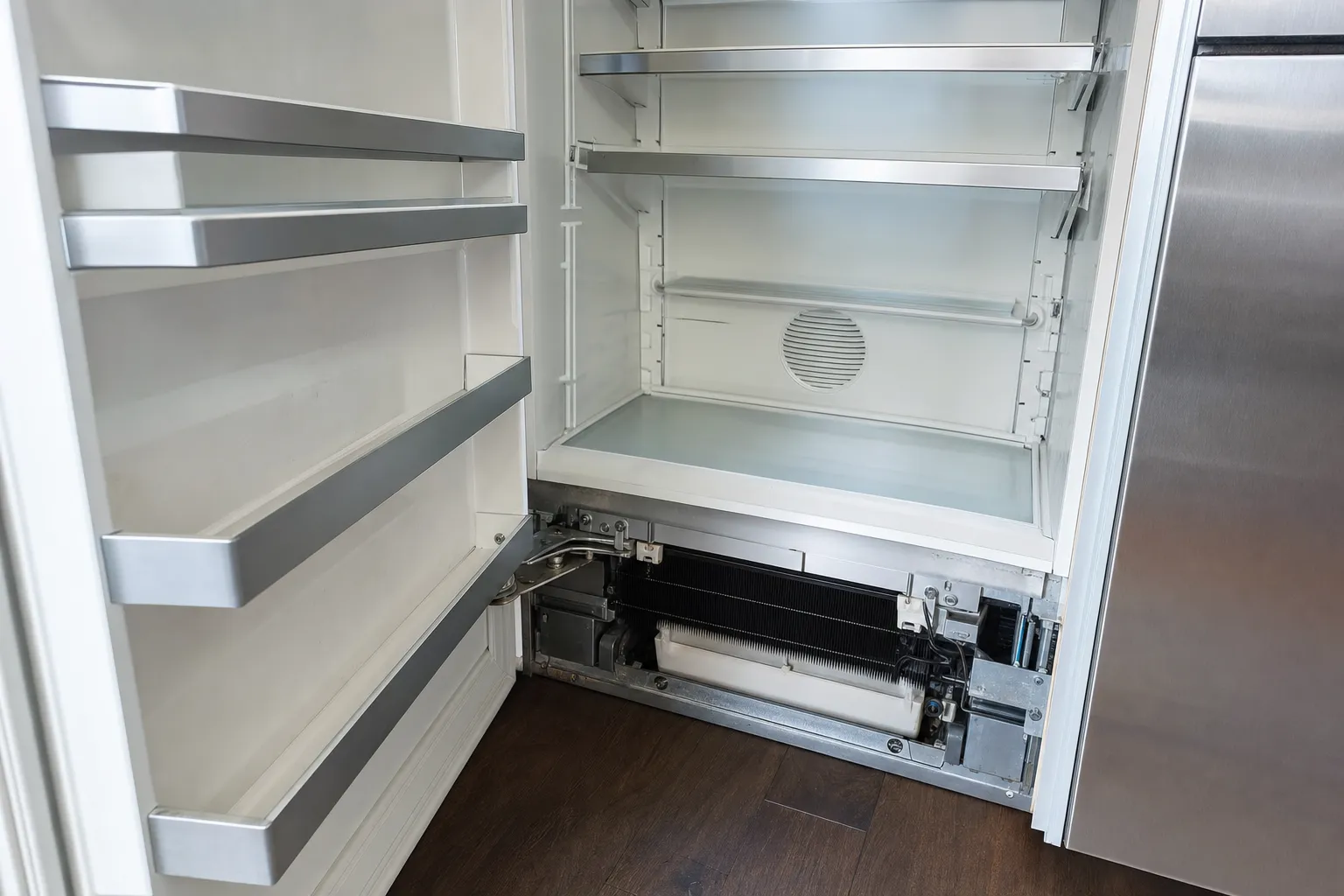
A Designer column shows no door skin of its own. The cabinetmaker’s panel is the door face, hung on two mounting brackets, with the handle fitted near the edge away from the hinge. Sub-Zero sets the limits in its installation guide: a panel at least 5/8 inch thick, and no heavier than 60 lb on the 24-inch column or 75 lb on the 30- and 36-inch models.
We compare the panel with that figure first. Solid slabs, applied mouldings and stone or metal inlays add weight fast, and the hinge carries every pound of it on each swing.
Where the trouble starts
Four faults account for most of what we see on this series, and each one feeds the next.
- The seal. A gasket with a tear, a flat spot or a fold lets room air in. Frost, sweating and a compressor that hardly rests follow, and all three read like a cooling fault.
- The hinge. A panel over the rating, or a door used as a handhold, lets the handle side drop. The panel starts to rub and the seal lifts at the top corner.
- The reveal. Sub-Zero calls a gap of 1/8 inch between panels typical, and warns that tighter reveals pinch fingers as the door closes. As the gap closes, the door starts to bear on its neighbour.
- The swing. The hinges stop at 105 degrees. In a tight kitchen that is far enough for the panel to strike a wall or an island edge.
When a column door will not close
Something is meeting before the seal does. A bin or bottle standing proud of the liner, a drawer short of home, or the panel against whatever stands beside it. Level explains the rest: a cabinet set to the cabinetry rather than the floor leans the door out of its frame.
How the door is set right
Most of this is done with the column in its opening. The panel moves side to side on its mounting screws, and up, down, in and out on cams in the brackets, so a panel that has drifted goes back to its reveal without touching the cabinetry. A torn gasket is replaced as a whole part. A hinge worn by an overweight panel is replaced, and the weight is dealt with too, or the new hinge follows the old one.
The tag inside the middle drawer, near the drawer guide on the side away from the hinge, gives us the model before we arrive. These notes follow the current DEC installation guide; on an older IC column we read that model’s own guide first.
In this series
- Column Door Standing Proud of the Cabinet Run We measure depth, level and the panel cams when a column door stands proud. Set the door right first and a seal fault cannot pass for a cooling one.
- Torn or Flattened Gasket on a Column Door We check the seal with a paper strip at six points and look for tears, flat spots and folds. A door that seals rules out the cheapest cause of a warm cabinet.
- Hinge Sag Under a Heavy Custom Panel We weigh the custom panel against Sub-Zero's limit for that column width before judging the hinge. An overweight panel wears out whatever hinge carries it.
- Uneven Reveals Between Panel and Neighbouring Doors We measure the gap down both sides and across the top of a column panel. An even reveal keeps a door off its neighbour.
- Door Alarm Sounding With the Door Shut We confirm the door comes fully home before looking at the alarm setting or the door sensing. A door that stops a fraction short can still read as open.
- Door Hitting the Wall: Stops and Opening Angle We check the hinge stop, the panel thickness and what the door meets at full swing. Sub-Zero supplies 90-degree clips for exactly this case.
- Handle Working Loose on a Wood Panel We check how the handle is fixed into the panel and how hard the door takes to open. A loose handle is often the sign of a stiff door, not the fault itself.
Questions owners ask
How heavy can the custom panel on a Designer column be?
Sub-Zero's installation guide allows up to 60 lb on a 24-inch column door and 75 lb on the 30- and 36-inch doors, with a panel at least 5/8 inch thick. Sub-Zero Appliance Repair Bellevue weighs a suspect panel before replacing a hinge; call (425) 696-2636.
Can the door be stopped at 90 degrees so it does not reach the wall?
Yes. These hinges have a 105-degree stop built in, and Sub-Zero supplies clips that limit the swing to 90 degrees; its guide says a panel thicker than an inch may need them. Sub-Zero Appliance Repair Bellevue fits them on a visit, (425) 696-2636, when a door is reaching a wall or island.
Does a torn gasket really make the fridge run warm?
It can. Sub-Zero's own troubleshooting for frost, condensation and ice inside the unit lists three door items after the condenser: closing properly, not left ajar, gasket free of rips or tears. A torn seal lets room air in all day, so the compressor runs longer and the cabinet still drifts warm.
Where this sits
All five series we serviceSeries are grouped by how the door and panel are hung, which is where this bench starts.